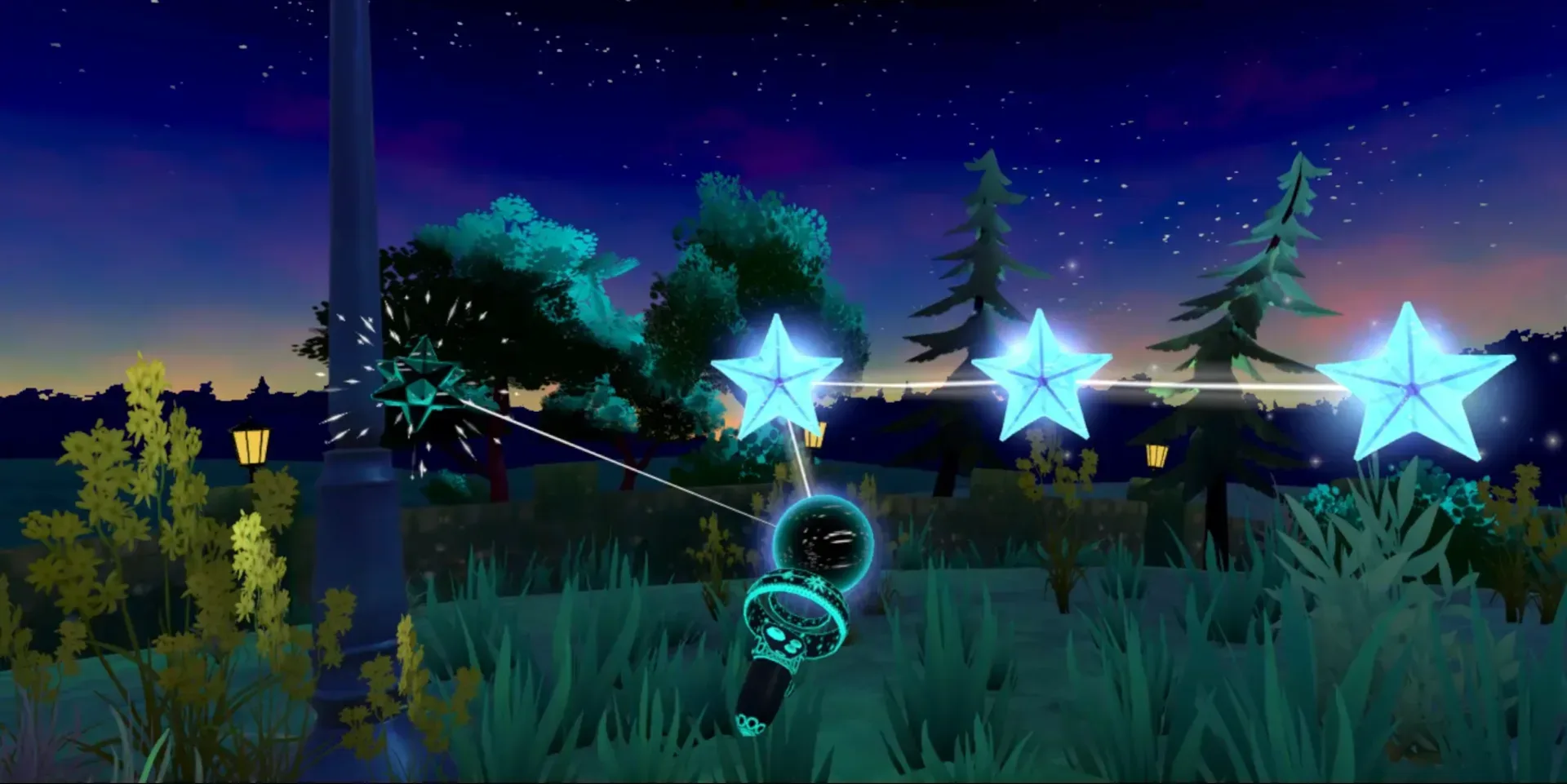
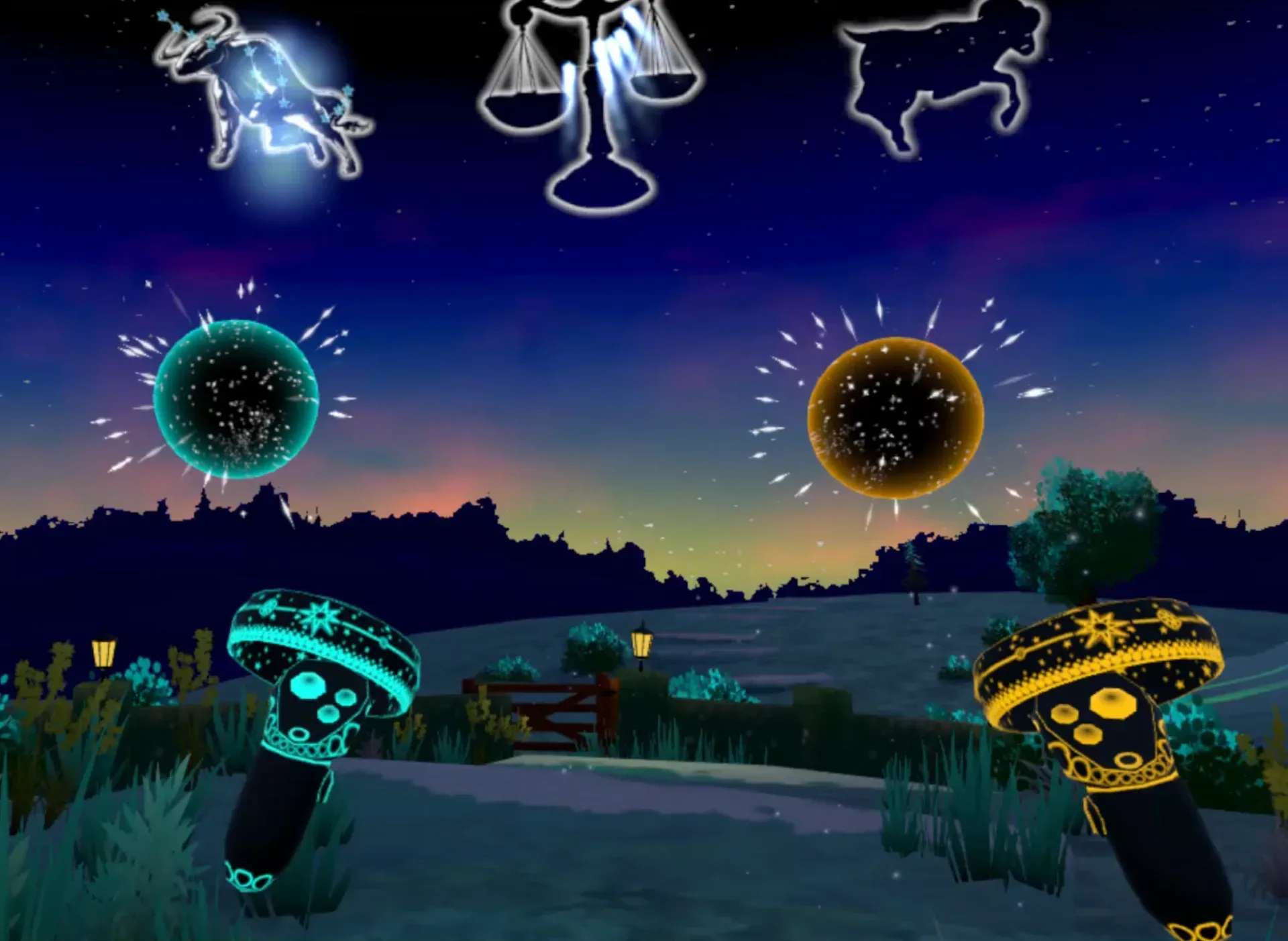
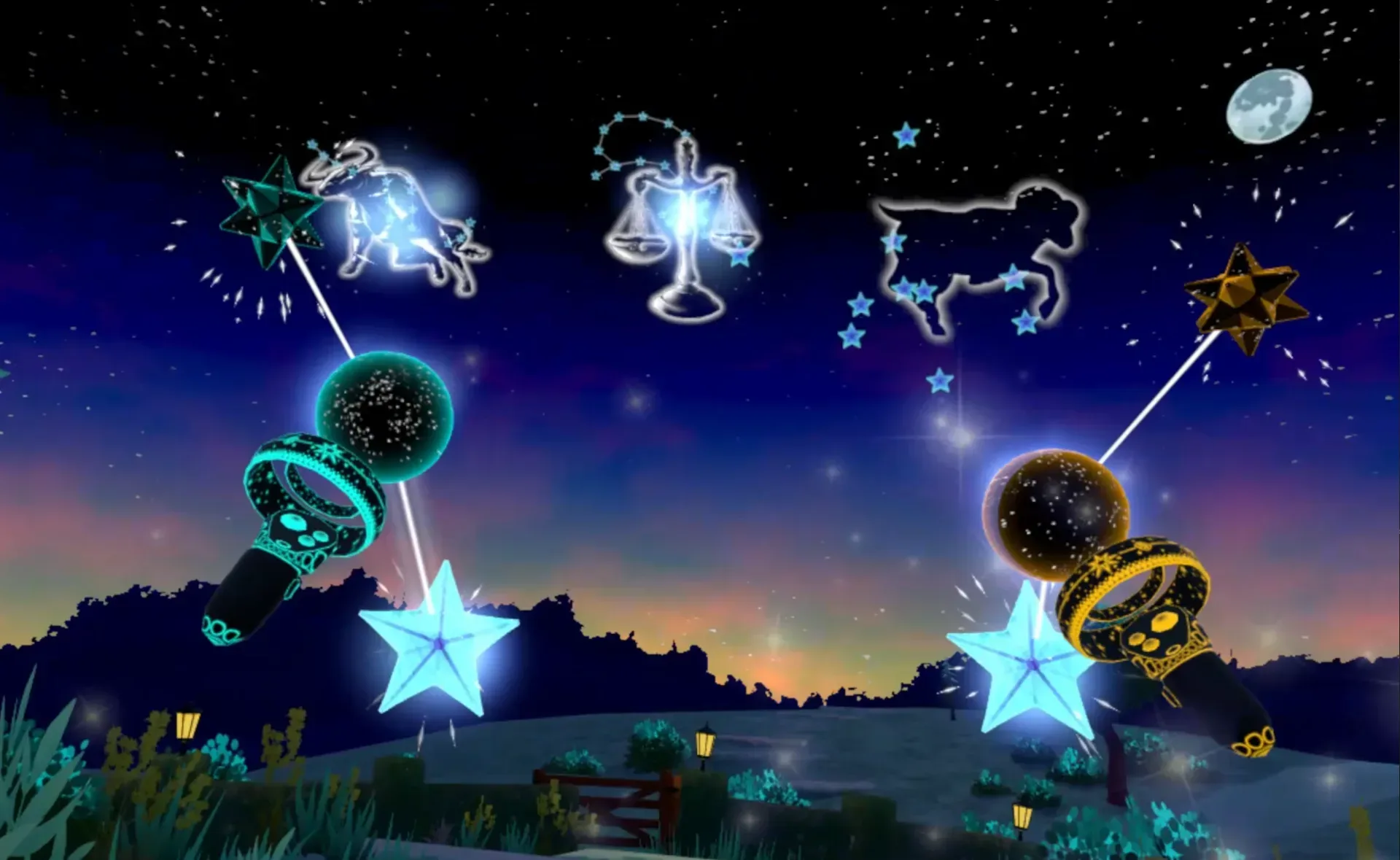
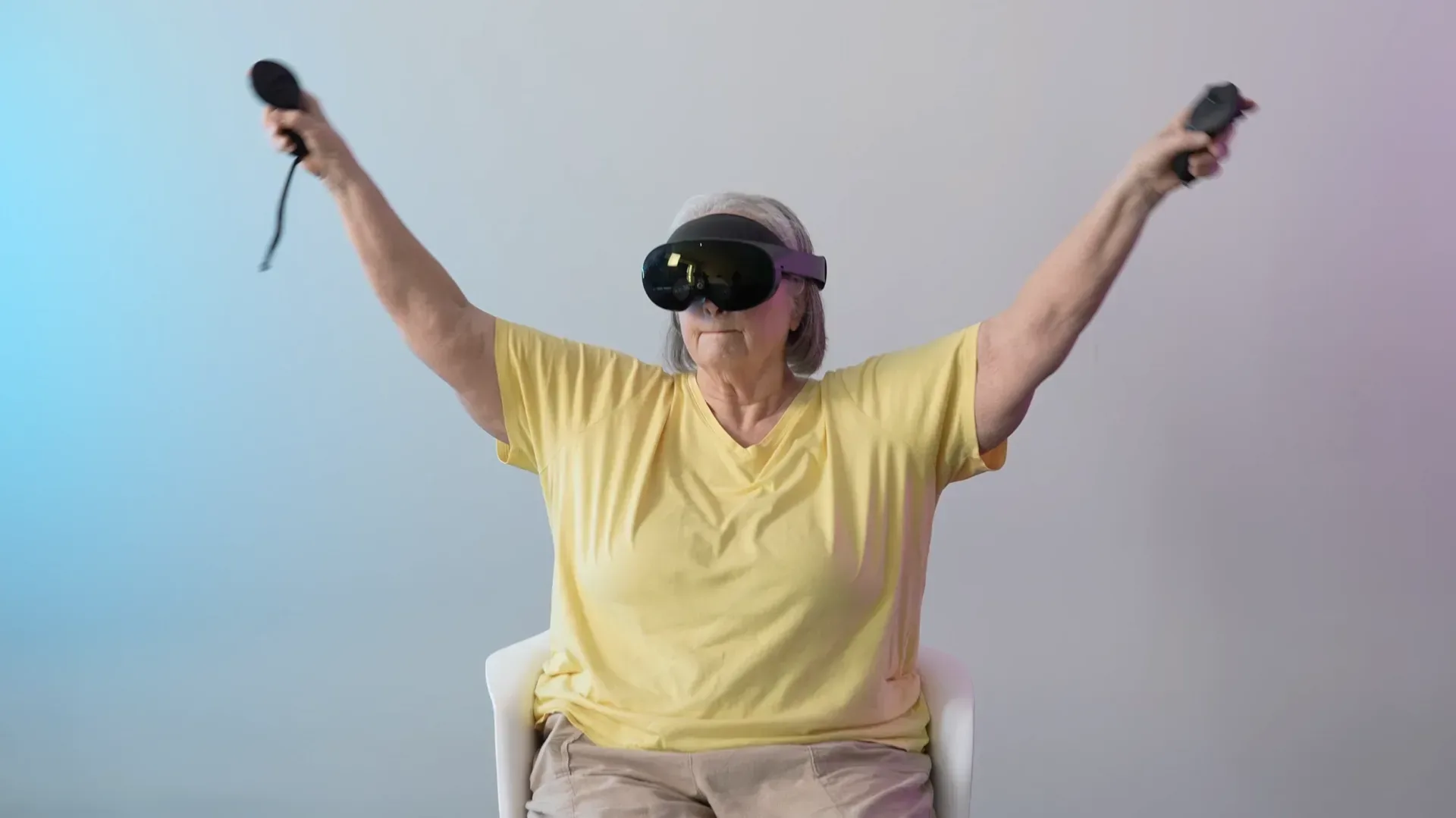
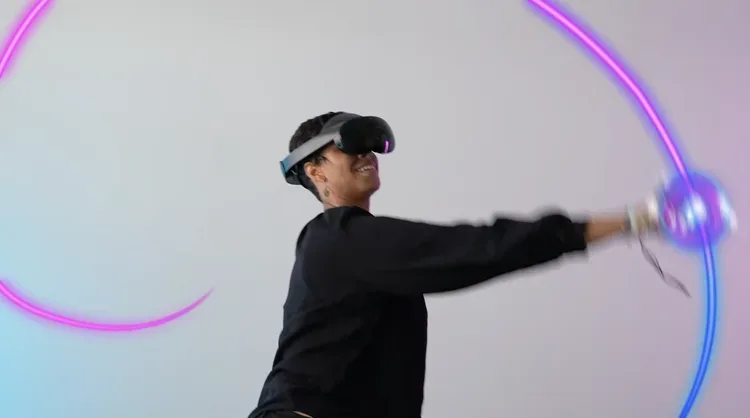
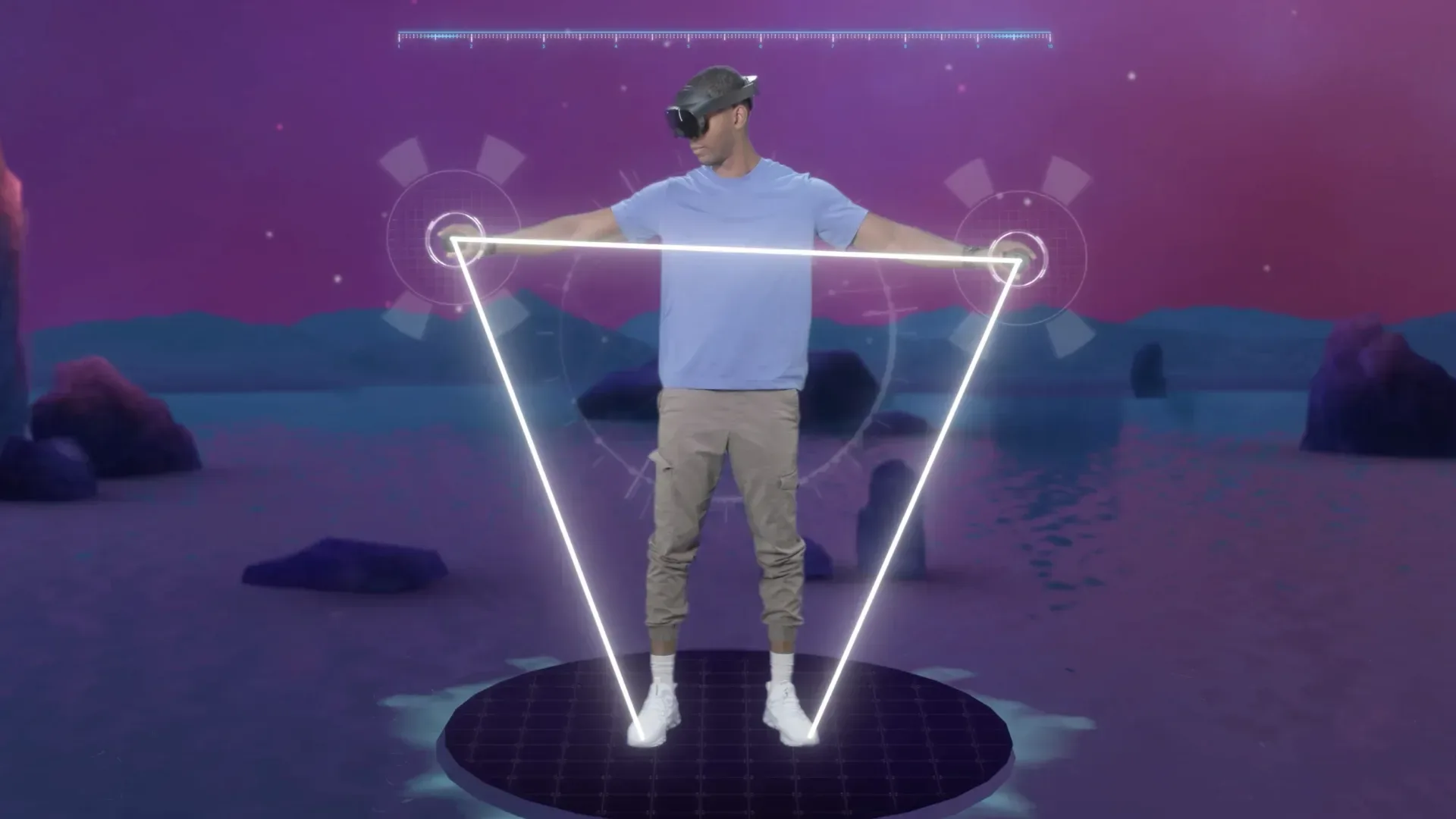
Mind & Motion is a VR application for chronic pain patients that encourages functional movement through a relaxing, VR play space. The application adapts to both the clinician prescribing treatment and the patient performing it.
Design
I worked weekly with a physical therapist consultant to develop the routines and clinical requirements, grounding the design in clinical input. In many cases, the range of motion in chronic pain patients is limited more by fear of movement than by pain or injury itself. When exercising within the distracting qualities of VR and gamified mechanics, patients found they could move well beyond their perceived limitations.
Patient bodies and clinician programs both vary, so I built two systems to handle it. Clinician-facing authoring tools let PTs create and prescribe their own sequences instead of working from a fixed library I built myself. Every session opens with a warm-up that captures the patient’s range of motion, and the rest of the session scales against that target.
How It Works
- Users trace a sequence of ribbons through 3D space. Each ribbon is a spline; hand position is evaluated by checking distance to the nearest point along the curve
- Clinicians can toggle variations to enforce specific motion types: one-handed, two-handed, and neck-and-gaze, so a clinician can target specific physical goals instead of prescribing generic exercise
- Clinicians record their own reference movements directly in VR, acting the motion out and placing targets live with no external tooling. A new routine reaches a patient’s library as fast as the clinician can perform it
- Movements land in a shared database that any clinician can pull from and prescribe in any order, building a patient’s program over time
- The program adapts to the patients limitations and strengths: a patient’s warm-up measures their range of motion and compares it to the range recorded by whoever authored that movement, then scales target placement to fit. The same movement is attainable whether it was authored by a fully mobile clinician or performed by a patient with a fraction of that range
Outcome
- Studied across 165 subjects in 2 completed randomized controlled trials, 1 ongoing RCT, and multiple case studies
- Used by over 8,000 patients across more than 22,000 patient encounters
- 87% mean patient satisfaction (out of 100)
- 20% greater likelihood of clinical disability reduction
- 2.5x improvement in pain catastrophizing